 Tourism Guide
Dingling Tomb
The Dingling Tomb is one of the Ming Dynasty Tombs located in the Changping District of Beijing, serving as the final resting place of Emperor Wanli, the 13th emperor of the Ming Dynasty, and his two empresses
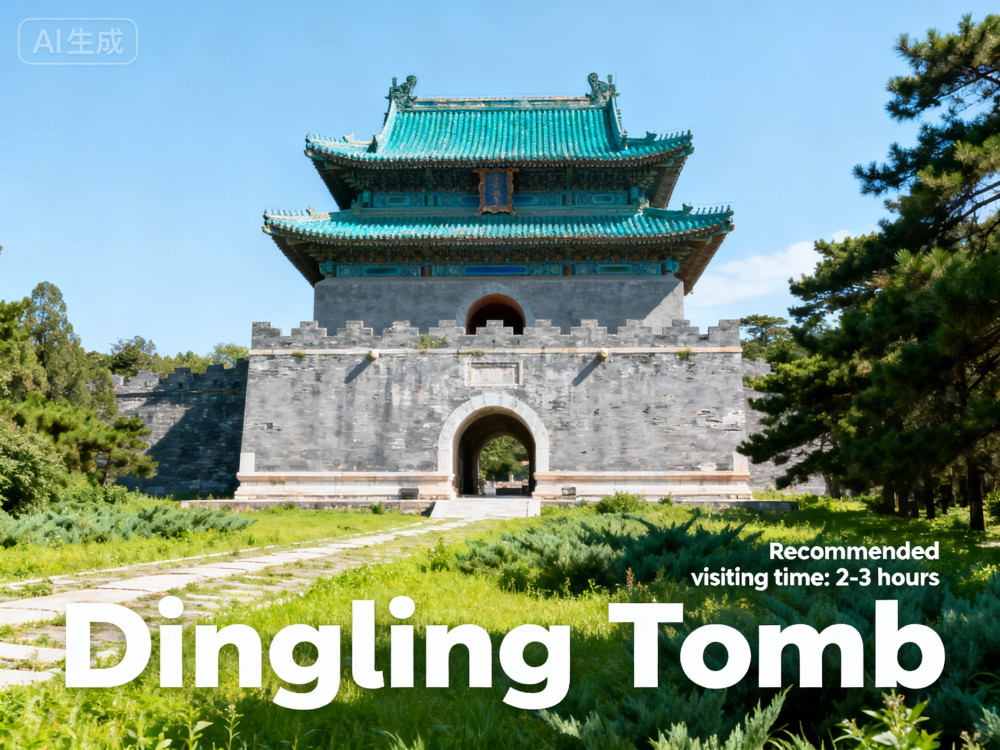
Key Information
Construction Period
1584-1590 AD
Dynasty
Ming Dynasty
Buried Emperor
Emperor Wanli (Zhu Yijun)
Excavation Year
1956-1957
UNESCO Status
Part of Ming and Qing Imperial Tombs World Heritage Site
Architectural Style
Traditional Chinese Imperial Tomb Architecture
Main Chambers
5 interconnected marble chambers
Artifacts Discovered
Over 3,000 cultural relics
About Dingling Tomb
Dingling Tomb, constructed between 1584 and 1590, represents one of the most significant archaeological discoveries in modern Chinese history. As the only Ming Dynasty imperial tomb that has been excavated and opened to the public, it offers a rare glimpse into the sophisticated burial practices and architectural achievements of the Ming era. The tomb complex follows traditional Chinese geomantic principles, with its layout carefully designed according to feng shui concepts to ensure harmony between heaven, earth, and humanity. The underground palace, discovered in 1956 and excavated in 1957, consists of five interconnected marble chambers arranged in a T-shape pattern, covering an area of 1,195 square meters. The main burial chamber houses three marble thrones for Emperor Wanli and his two empresses, along with numerous precious artifacts that reflect the artistic and cultural achievements of the late Ming period. The excavation revealed over 3,000 cultural relics, including exquisite gold and jade artifacts, silk textiles, porcelain, and personal items that provide invaluable insights into 16th-century Chinese court life, craftsmanship, and imperial traditions.
Things to Do
- Explore the Underground Palace with its five interconnected marble chambers
- View the original burial thrones of Emperor Wanli and his two empresses
- Examine the replica artifacts in the exhibition halls showcasing Ming Dynasty treasures
- Walk through the Spirit Way leading to the tomb complex
- Study the intricate stone carvings and architectural details
- Learn about Ming Dynasty burial customs and imperial rituals
- Visit the Dingling Museum to see archaeological findings
- Photograph the traditional Chinese tomb architecture and surrounding landscape