 Tourism Guide
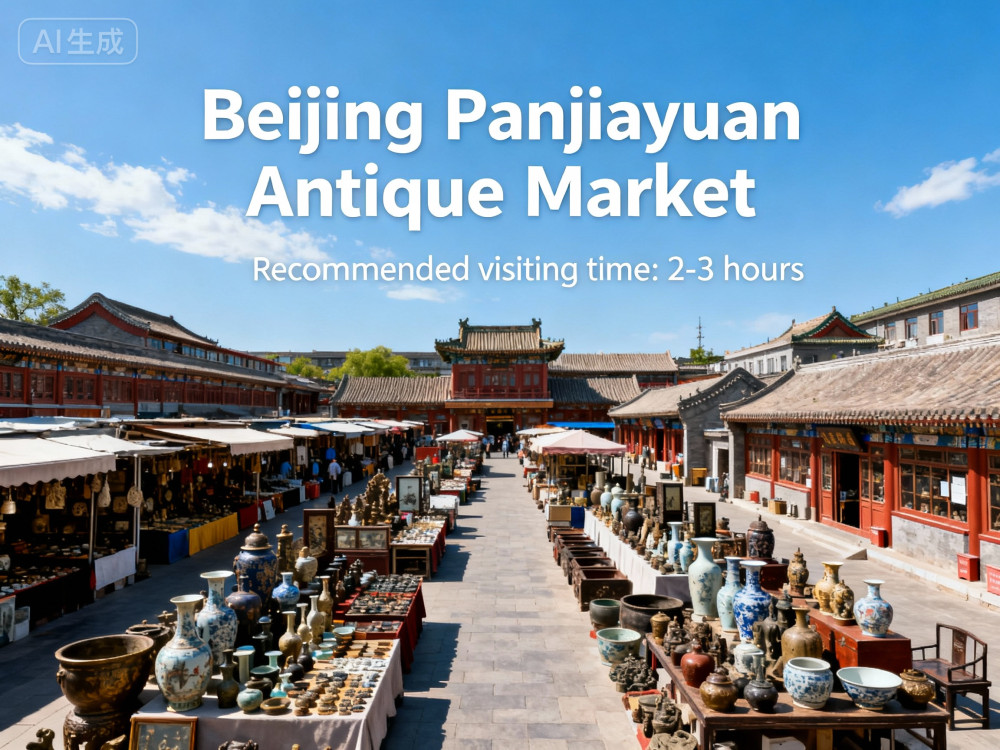
Panjiayuan Antique Market
Beijing's largest and most famous antique market, often called the 'Dirt Market' where collectors and enthusiasts hunt for treasures
Key Information
Best Time to Visit
Saturday and Sunday mornings from 5:00 AM to 10:00 AM
Market Days
Main market operates Friday evening through Sunday
Specialty Areas
Porcelain section, furniture area, jewelry zone, book market, folk art section
Bargaining Tips
Start at 30-40% of asking price, be prepared to walk away
Authentication
Bring an expert or use market authentication services
Payment Methods
Cash preferred, some vendors accept mobile payments
Transportation
Subway Line 10 to Panjiayuan Station, Exit B
Nearby Attractions
Temple of Heaven, Hongqiao Pearl Market, Longtan Park
Panjiayuan Antique Market is a sprawling weekend market that has become an institution in Beijing's cultural scene. Covering over 48,500 square meters, this vibrant marketplace is where history comes alive through thousands of vendors selling everything from genuine antiques to reproduction crafts. Originally starting as a spontaneous gathering of antique dealers in the 1990s, it has grown into Asia's largest antique market. The market operates primarily on weekends, with the best selection available early Saturday and Sunday mornings when serious collectors arrive at dawn to find hidden treasures. The atmosphere is electric with the sounds of bargaining in multiple languages, the sight of colorful artifacts from different dynasties, and the scent of traditional Chinese tea being brewed by vendors. What makes Panjiayuan truly special is its democratic nature - here you'll find university professors debating authenticity with vendors, international collectors hunting for Ming dynasty porcelain, local families looking for home decorations, and tourists seeking unique souvenirs, all mingling in the same crowded aisles.
Things to Do
- Browse through thousands of stalls selling antiques and collectibles
- Hunt for authentic Chinese artifacts from various dynasties
- Learn about Chinese history through material culture
- Practice bargaining skills with experienced vendors
- Discover traditional Chinese crafts and folk art
- Find unique souvenirs and gifts with historical significance
- Observe expert collectors evaluating and authenticating items
- Enjoy traditional Chinese tea at market tea houses
- Photograph the vibrant market scenes and colorful displays
- Attend weekend cultural performances and demonstrations