 Tourism Guide
Fangcun Tea Market
The largest tea trading market in Asia and the worlds tea trading hub
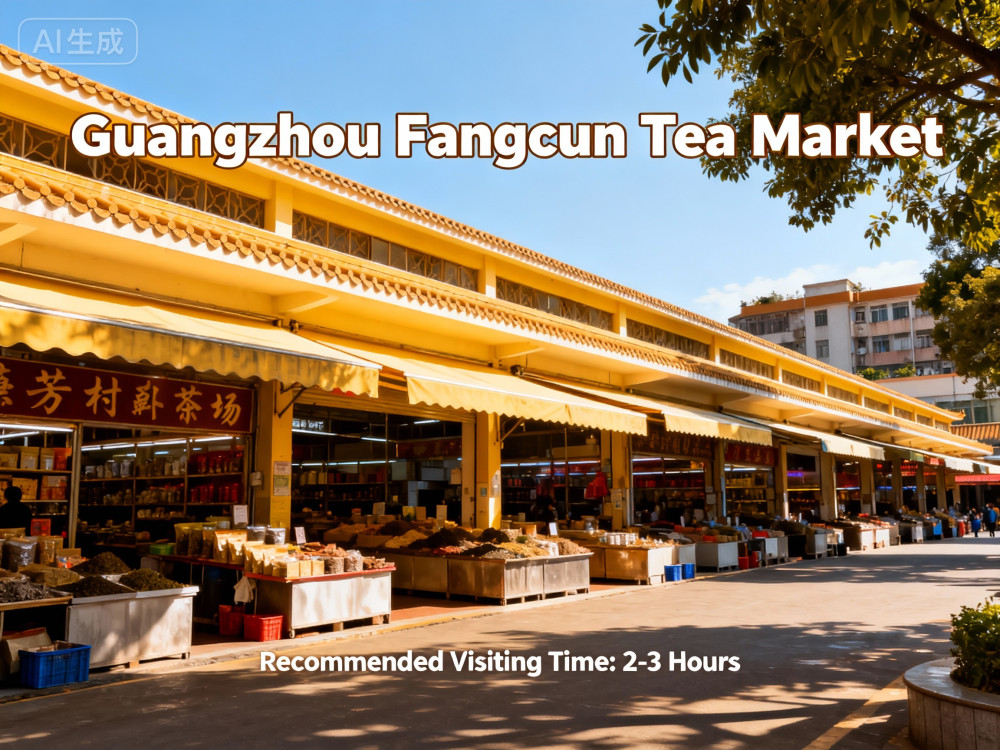
Key Information
Established Year
1990s
Total Area
Over 100,000 square meters
Number of Shops
Thousands of tea businesses
Tea Trade Volume
Over 70% of Chinas tea transactions
Main Tea Types
Pu-erh, Oolong, Green Tea, Black Tea, White Tea
Cultural Significance
Center of Chinese tea culture and trade
Historical Connection
Part of Guangzhous Maritime Silk Road legacy
Best Time to Visit
Morning hours for fresh tea tasting
Language Support
Basic English available in larger shops
Payment Methods
Cash, WeChat Pay, Alipay, Credit Cards
Fangcun Tea Market is not just a market but a living museum of Chinese tea culture. Located in the Liwan District of Guangzhou, this sprawling complex covers over 100,000 square meters and houses thousands of tea shops, wholesalers, and tea-related businesses. Established in the 1990s, it has grown to become the epicenter of Chinas tea trade, handling over 70% of the nations tea transactions. The market is a sensory journey through the world of tea, with aromas of pu-erh, oolong, green tea, black tea, and white tea filling the air. Beyond commerce, it serves as a cultural exchange center where tea masters, connoisseurs, and enthusiasts gather to share knowledge, practice traditional tea ceremonies, and preserve centuries-old tea traditions. The market represents Guangzhous historical role as a major trading port along the Maritime Silk Road, continuing the citys legacy as a bridge between Chinese culture and the world.
Things to Do
- Explore the vast tea market with thousands of specialized tea shops
- Participate in traditional Chinese tea tasting sessions with expert tea masters
- Learn about different tea varieties including pu-erh
- oolong
- green tea
- and black tea
- Witness tea processing and packaging techniques
- Attend tea culture workshops and tea ceremony demonstrations
- Shop for authentic Chinese tea leaves
- tea sets
- and tea-related accessories
- Visit tea museums and cultural exhibitions within the market complex
- Experience the bustling wholesale tea trading atmosphere
- Sample various regional teas from different provinces of China
- Learn about tea storage and aging processes especially for pu-erh tea