 Tourism Guide
Temple of Six Banyan Trees
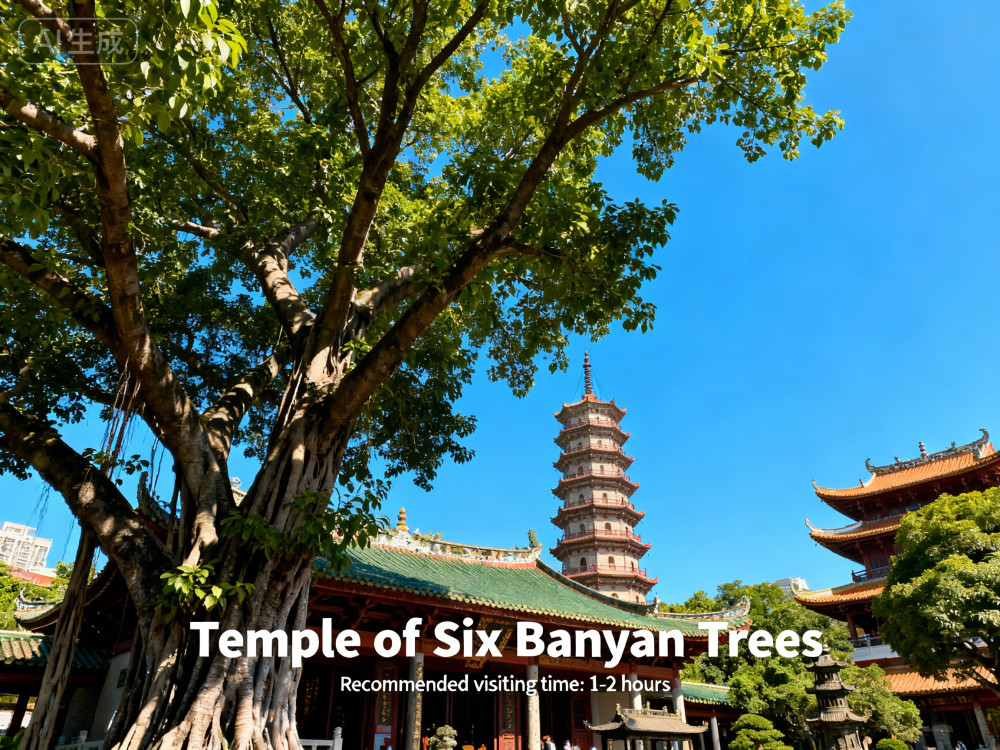
A historic Buddhist temple dating back to 537 AD during the Liang Dynasty, famous for its magnificent Flower Pagoda and ancient banyan trees
Key Information
Founded
537 AD
Architectural Style
Chinese Buddhist Architecture
Main Structure
Flower Pagoda (57.6m)
Historical Period
Liang Dynasty to Present
UNESCO Status
Not Listed
Best Time to Visit
October to December
Religious Affiliation
Buddhism
Special Features
Ancient Banyan Trees, Flower Pagoda
Nearby Attractions
Guangxiao Temple, Yuexiu Park
Accessibility
Wheelchair Accessible
The Temple of Six Banyan Trees, also known as Liurong Temple, is one of Guangzhous most important Buddhist temples with a history spanning over 1,500 years. Originally built in 537 AD during the Liang Dynasty, the temple was named after the six ancient banyan trees planted by the famous poet Su Dongpo during the Song Dynasty. The temples centerpiece is the magnificent Flower Pagoda, a 57.6-meter tall octagonal structure that has become an iconic symbol of Guangzhou. The pagoda features nine stories with colorful glazed tiles and intricate Buddhist carvings. The temple complex houses several halls including the Mahavira Hall, Hall of Six Patriarchs, and Hall of Guanyin, each containing precious Buddhist statues and artifacts. Throughout its long history, the temple has been destroyed and rebuilt several times, with the current structures dating mainly from the Qing Dynasty. It serves as an active Buddhist monastery and cultural center, attracting both pilgrims and tourists who come to admire its architectural beauty and spiritual atmosphere.
Things to Do
- Admire the magnificent Flower Pagoda from different angles
- Explore the ancient banyan trees that give the temple its name
- Visit the Hall of Six Patriarchs with its precious Buddhist statues
- Experience traditional Buddhist ceremonies during festivals
- Climb the pagoda for panoramic views of Guangzhou
- Study the intricate architectural details and carvings
- Participate in meditation sessions offered by the temple
- Learn about the temples connection to famous poet Su Dongpo
- Photograph the colorful glazed tiles and traditional architecture
- Explore the surrounding temple gardens and courtyards