 Tourism Guide
Pagoda Forest
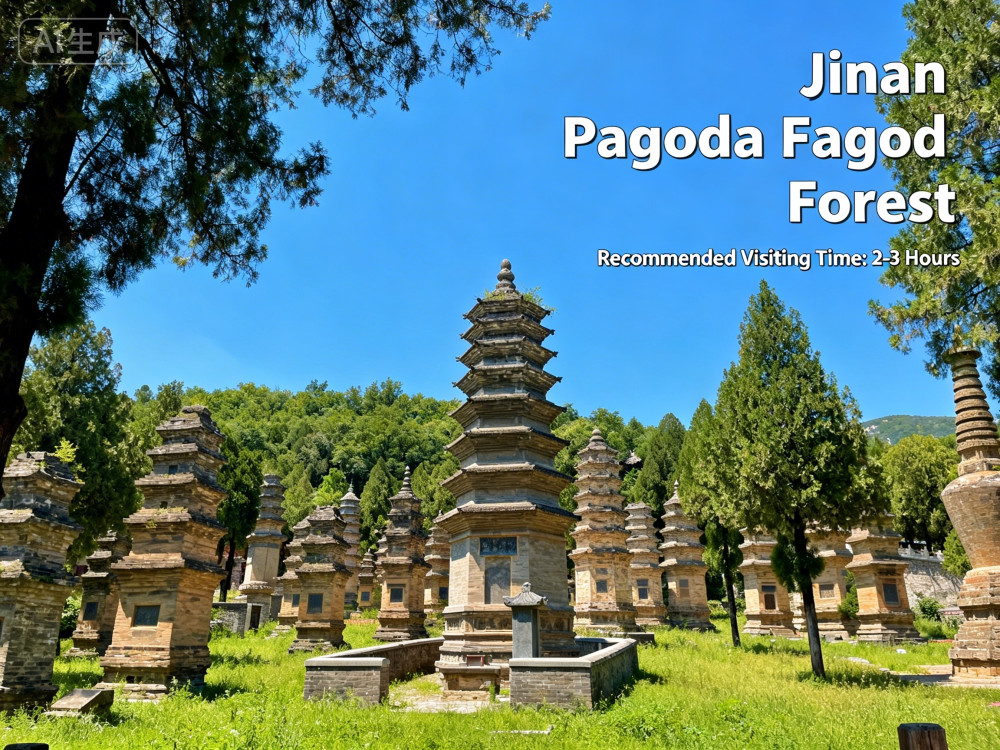
The Pagoda Forest at Lingyan Temple is one of Chinas most spectacular collections of ancient Buddhist stupas dating from the Tang to Qing dynasties
Key Information
Historical Period
Tang Dynasty to Qing Dynasty 618-1911 AD
Number of Pagodas
167 stone and brick structures
UNESCO Status
Part of Mount Tai UNESCO World Heritage Site
Best Time to Visit
Spring April-May and Autumn September-October
Architectural Styles
Tang Song Yuan Ming Qing dynasty variations
Main Pagoda
Huichong Pagoda built 753 AD Tang Dynasty
Religious Significance
Buddhist burial site for eminent monks
Accessibility
Moderate walking required uneven paths
About Pagoda Forest
Located at the foot of Mount Tai in Jinan Shandong Province the Pagoda Forest is part of the ancient Lingyan Temple complex This remarkable collection features 167 stone and brick pagodas built between the Tang Dynasty 618907 and Qing Dynasty 16441911 making it one of Chinas largest and most historically significant pagoda forests Each pagoda serves as a tomb for eminent monks who lived and taught at Lingyan Temple over centuries The forest showcases exquisite Buddhist architecture with intricate carvings symbolic designs and diverse architectural styles that evolved through different dynasties The most famous is the Huichong Pagoda built in 753 AD during the Tang Dynasty which stands as the oldest and most artistically valuable structure The site represents a living museum of Chinese Buddhist history stone carving art and religious architecture offering visitors a serene journey through time amidst ancient pine trees and tranquil mountain scenery
Things to Do
- Explore the ancient pagodas arranged in a forestlike formation dating from Tang to Qing dynasties
- Admire the intricate stone carvings and Buddhist symbolism on each pagoda
- Visit the nearby Lingyan Temple one of Chinas Four Great Ancient Temples
- Photograph the Huichong Pagoda the oldest and most artistically significant structure
- Walk through the serene pine forest surrounding the pagoda collection
- Study the evolution of Buddhist architecture across different Chinese dynasties
- Learn about the eminent monks memorialized in each pagoda
- Enjoy the peaceful mountain atmosphere at the foot of Mount Tai