Why go
About
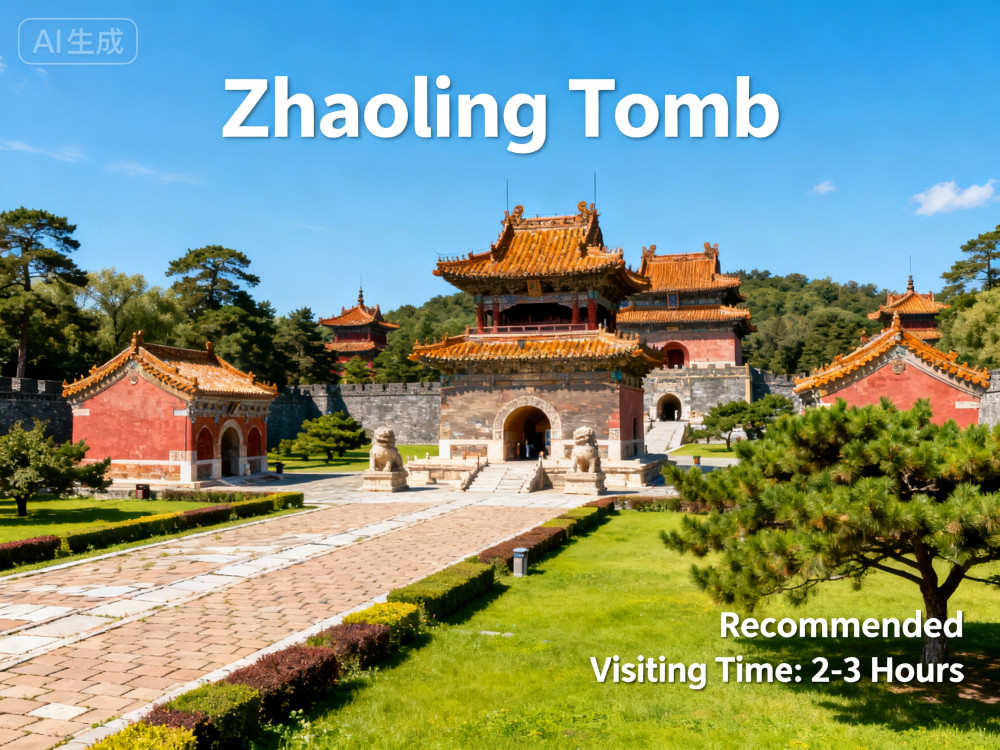
Zhaoling Tomb, also known as the North Mausoleum, is the burial site of Emperor Huang Taiji (1592-1643) and his empress Xiaoduanwen. As the second emperor of the Qing Dynasty, Huang Taiji played a crucial role in consolidating Manchu power and laying the foundation for the Qing conquest of China. The tomb complex represents a masterpiece of early Qing architecture, blending traditional Manchu burial customs with Chinese imperial tomb design principles.
Covering an area of 450 hectares, Zhaoling is the largest and most complete imperial tomb in Northeast China. The site features a perfect harmony of architecture and nature, with pine forests, stone statues, ceremonial halls, and the sacred burial mound arranged along a central axis according to Feng Shui principles. The tomb's design reflects the cultural integration between Manchu and Han civilizations during the early Qing period, making it not just a burial site but a symbol of cultural fusion and imperial power.
Make time for
Practical ideas, not a checklist
- Walk along the Sacred Way lined with stone statues of animals and officials
- Explore the magnificent Long'en Hall with its exquisite wooden architecture
- Admire the stone carvings and decorative elements throughout the complex
- Visit the underground palace chamber where Emperor Huang Taiji rests
- Enjoy the peaceful pine forest surrounding the tomb area
- Learn about Manchu burial customs and Qing Dynasty history
- Photograph the traditional Chinese architectural details
- Experience the solemn atmosphere of this imperial resting place
Good to know
- UNESCO Status
- Part of Imperial Tombs of the Ming and Qing Dynasties World Heritage Site
- Construction Period
- 1643-1651
- Architectural Style
- Manchu-Han fusion
- Main Structures
- Sacred Way, Stone Statues, Long'en Hall, Burial Mound
- Historical Significance
- Represents early Qing imperial power and cultural integration