 Tourism Guide
Eastern Qing Tombs
The Eastern Qing Tombs are one of Chinas largest and most complete imperial tomb complexes representing the pinnacle of Qing Dynasty funerary architecture and cultural heritage
Key Information
UNESCO World Heritage Site
2000
Construction Period
1661-1908
Total Area
80 square kilometers
Number of Tombs
161 imperial tombs
Main Emperors Buried
Shunzhi Kangxi Qianlong Xianfeng Tongzhi
Best Time to Visit
April to October
Architectural Style
Qing Dynasty Imperial Architecture
About Eastern Qing Tombs
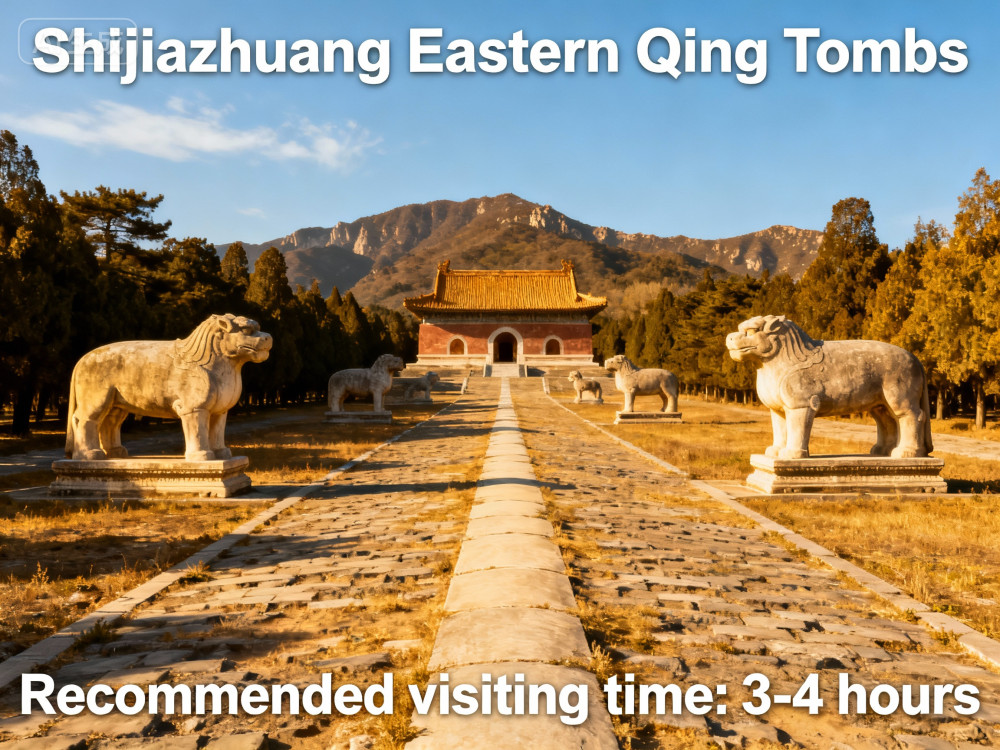
Located in Zunhua City about 125 kilometers northeast of Shijiazhuang the Eastern Qing Tombs are the final resting place of five Qing Dynasty emperors fifteen empresses 136 imperial concubines three princes and two princesses This UNESCO World Heritage Site covers an area of 80 square kilometers and represents the zenith of Chinese imperial tomb architecture The complex was constructed over 247 years from 1661 to 1908 following strict Feng Shui principles with the Changrui Mountain to the north and the Jinxing Mountain to the south creating a perfect natural protective barrier The tombs feature magnificent stone sculptures elaborate ceremonial pathways and underground palaces that showcase the artistic and architectural achievements of the Qing Dynasty The most notable tombs include those of Emperor Shunzhi the first Qing emperor to rule China Emperor Kangxi the longest reigning emperor in Chinese history and Emperor Qianlong under whose rule China reached its peak of prosperity The site also contains the tomb of Empress Dowager Cixi one of the most powerful women in Chinese history whose tomb is particularly ornate with intricate carvings and lavish decorations
Things to Do
- Walk along the Sacred Way to admire the magnificent stone sculptures of animals and officials
- Explore the underground palace of Emperor Qianlongs tomb with its Buddhist scripture carvings
- Visit Empress Dowager Cixis tomb to see the exquisite phoenix and dragon carvings
- Study the intricate architecture and symbolism of the tomb complexes
- Learn about Qing Dynasty burial customs and imperial rituals
- Photograph the stunning mountain backdrop and traditional Chinese architecture
- Visit the Dingdongling tomb complex with its unique combination of Chinese and Western architectural elements