 Tourism Guide
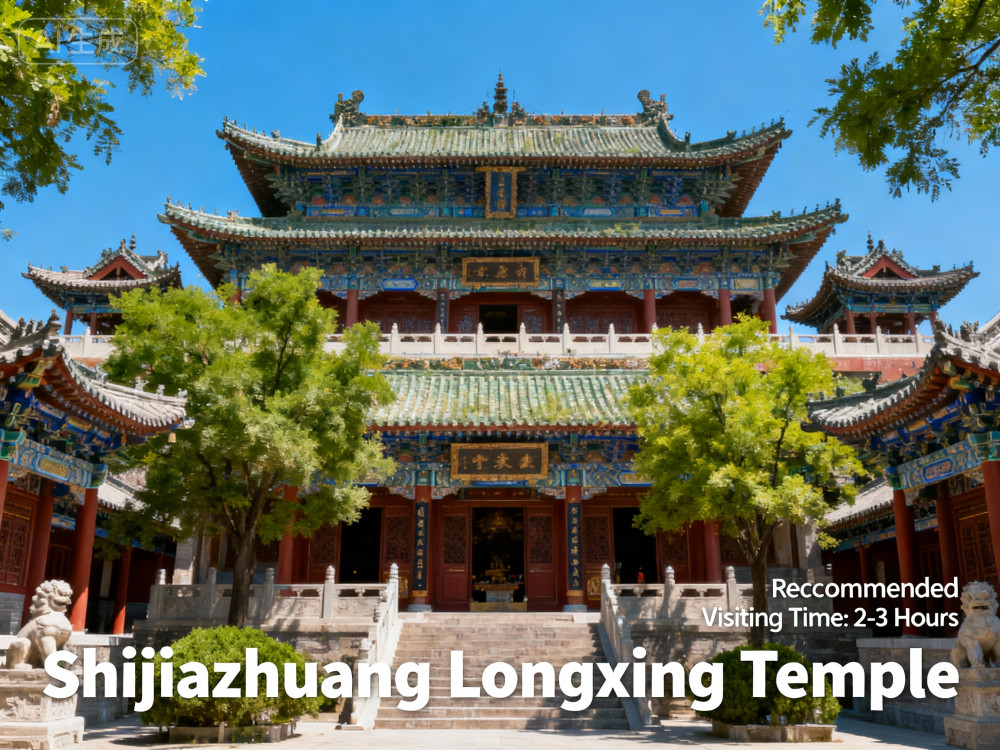
Longxing Temple
One of the oldest and most magnificent Buddhist temples in northern China, Longxing Temple is a treasure trove of ancient Buddhist art and architecture dating back over 1400 years
Key Information
Founded
586 AD during Sui Dynasty
Architectural Style
Traditional Chinese Buddhist Temple Architecture
Main Halls
Dabei Pavilion, Mani Hall, Zhuanlunzang Pavilion, Tianwang Hall
UNESCO Status
Part of the Four Great Temples of Hebei
Best Time to Visit
Spring and Autumn seasons
Special Features
Thousand-armed Thousand-eyed Guanyin Statue
Cultural Significance
National Key Cultural Relics Protection Unit
Nearby Attractions
Zhengding Ancient City, Kaiyuan Temple
About Longxing Temple
Longxing Temple, also known as the Great Buddha Temple, is located in Zhengding County of Shijiazhuang. Founded during the Sui Dynasty in 586 AD, this sprawling temple complex covers an area of 82,500 square meters and represents one of the most complete and well-preserved Song Dynasty Buddhist temple complexes in China. The temple is renowned for its magnificent architecture, exquisite Buddhist statues, and rich historical significance. It served as an important center for Buddhist worship and study throughout Chinese history, particularly during the Song, Jin, and Yuan dynasties. The temple complex features numerous halls, pavilions, and towers arranged along a central axis, showcasing traditional Chinese temple architecture at its finest. The most famous attraction is the 21.3-meter tall bronze statue of Guanyin, the Goddess of Mercy, housed in the Dabei Pavilion. This thousand-armed, thousand-eyed Guanyin is considered one of the most impressive Buddhist sculptures in China. The temple also contains valuable collections of stone steles, ancient scriptures, and Buddhist artifacts that provide insights into the development of Buddhism in northern China.
Things to Do
- Admire the magnificent 21.3-meter tall bronze statue of Guanyin in the Dabei Pavilion
- Explore the Mani Hall with its unique architectural style and beautiful murals
- Visit the Zhuanlunzang Pavilion featuring a rotating sutra cabinet from the Song Dynasty
- Examine the ancient stone steles and inscriptions that document the temple's history
- Appreciate the exquisite wood carvings and architectural details throughout the complex
- Learn about Buddhist philosophy and practices through the temple's educational displays
- Photograph the beautiful traditional Chinese architecture and serene temple grounds
- Participate in traditional Buddhist ceremonies during special festival days