 Tourism Guide
Xibaipo Memorial Hall
The sacred revolutionary site where the Communist Party of China completed its final rural revolution before liberating the whole country
Key Information
Established Year
1978
Museum Grade
National First-class Museum
Historical Period
Chinese Civil War 1948-1949
Key Historical Events
Seventh Plenary Session of the Seventh Central Committee
Architectural Style
Traditional Northern Chinese Rural Architecture
Best Visiting Season
Spring and Autumn
Recommended Visitor Age
All Ages
Photography Policy
Permitted in most areas
Audio Guide
Available in multiple languages
Accessibility
Wheelchair accessible
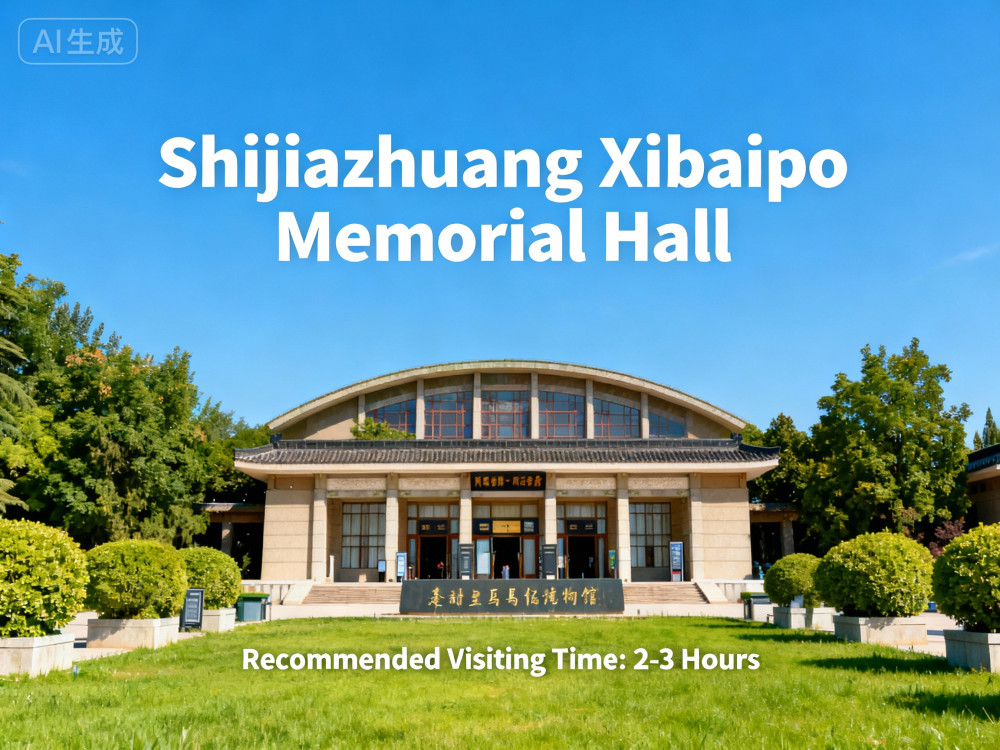
Xibaipo Memorial Hall stands as one of China's most significant revolutionary heritage sites, located in Pingshan County about 90 kilometers northwest of Shijiazhuang. This was the last rural revolutionary base of the Communist Party of China before the establishment of the People's Republic. From May 1948 to March 1949, Mao Zedong, Zhou Enlai, Liu Shaoqi, Zhu De, and other revolutionary leaders worked here, directing the decisive battles that would liberate China. The memorial complex includes restored original sites like the former residences of revolutionary leaders, the Central Committee Military Commission command center, and the Seventh Plenary Session of the Seventh Central Committee venue. Visitors can explore exhibition halls displaying historical photographs, documents, and artifacts that chronicle this crucial period in China's revolutionary history. The site beautifully preserves the simple living conditions and strategic planning environment that characterized this revolutionary headquarters.
Things to Do
- Visit the restored former residences of Mao Zedong Zhou Enlai and other revolutionary leaders
- Explore the Central Committee Military Commission command center where major battles were directed
- See the venue of the historic Seventh Plenary Session of the Seventh Central Committee
- Walk through the extensive exhibition halls with historical photographs and artifacts
- Learn about the revolutionary spirit and simple living conditions of that era
- Take photos at the iconic Xibaipo monument and memorial statues
- Watch documentary films about the revolutionary history in the multimedia hall
- Participate in patriotic education activities and red culture experiences