 Tourism Guide
Confucius Temple
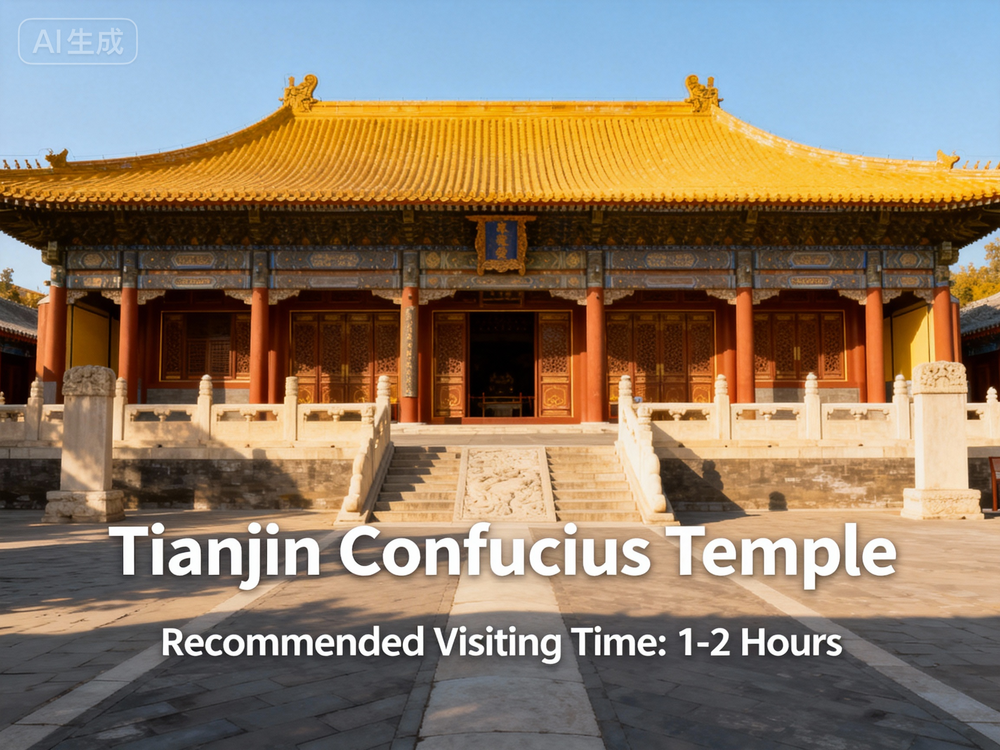
A historic temple dedicated to Confucius showcasing traditional Chinese architecture and cultural heritage
Key Information
Built Year
1436
Architectural Style
Traditional Chinese
Main Hall
Dacheng Hall
Area
12,000 square meters
Dynasty
Ming Dynasty
The Tianjin Confucius Temple is one of the most well-preserved Confucian temples in northern China. Built during the Ming Dynasty in 1436, this sacred complex spans over 12,000 square meters and serves as a testament to China's deep reverence for education and philosophy. The temple follows traditional Chinese architectural principles with its symmetrical layout, featuring the main Dacheng Hall where Confucius is worshipped, along with other halls dedicated to his disciples. The intricate wooden carvings, colorful paintings, and stone steles create an atmosphere of profound cultural significance. Throughout history, this temple has been a center for imperial examinations and scholarly activities, embodying the Confucian ideals of wisdom, morality, and social harmony that have shaped Chinese civilization for over two millennia.
Things to Do
- Admire the magnificent Dacheng Hall with its traditional Chinese architecture
- Explore the stone steles inscribed with Confucian teachings
- Visit the exhibition halls showcasing Confucius life and philosophy
- Participate in traditional cultural activities during festivals
- Take photographs of the intricate wooden carvings and colorful paintings
- Learn about the imperial examination system in ancient China
- Enjoy the peaceful atmosphere in the temple courtyards