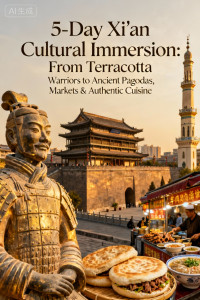
 Tourism Guide
Terracotta Warriors Museum
The Eighth Wonder of the World and China's most significant archaeological discovery of the 20th century
Key Information
UNESCO Status
World Heritage Site since 1987
Discovery Year
1974
Construction Period
246-210 BCE
Total Area
16,300 square meters
Number of Pits
3 main pits plus exhibition halls
Best Time to Visit
March to May and September to November
Audio Guide Available
Yes in multiple languages
Photography Allowed
Yes but no flash in certain areas
Nearest Airport
Xi'an Xianyang International Airport
Transportation
Tourist bus 5 or private car from Xi'an city center
About Terracotta Warriors Museum
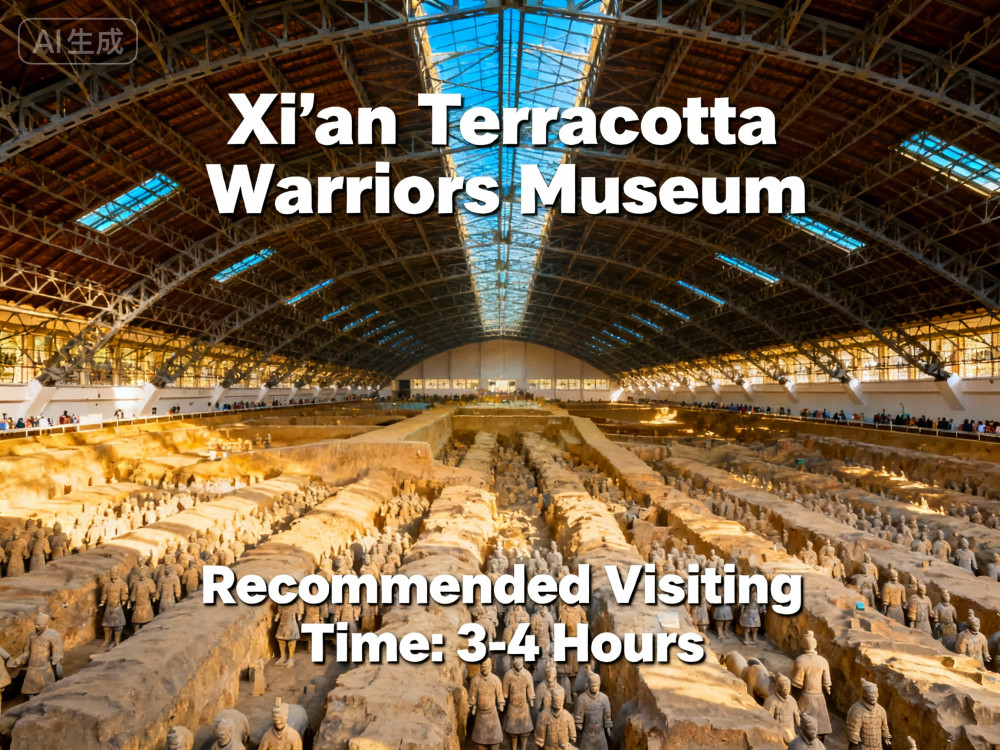
The Terracotta Warriors Museum is an extraordinary archaeological site discovered in 1974 by local farmers digging a well. This vast underground army was created to accompany China's first emperor Qin Shi Huang in the afterlife. The museum complex consists of three main pits containing over 8,000 life-sized terracotta soldiers, 130 chariots with 520 horses, and 150 cavalry horses, each with unique facial features, hairstyles, and armor. This UNESCO World Heritage Site represents one of the greatest artistic achievements of ancient China and provides invaluable insights into Qin Dynasty military organization, weaponry, and craftsmanship. The warriors were created around 210-209 BCE and remained buried for over 2,200 years until their accidental discovery.
Things to Do
- Explore Pit 1 the largest excavation containing over 6
- 000 warriors in battle formation
- Visit Pit 2 to see the command center with generals officers and cavalry units
- Discover Pit 3 the smallest pit believed to be the army headquarters
- Examine the Bronze Chariots and Horses Exhibition showcasing exquisite ancient bronze craftsmanship
- Watch the documentary film about the discovery and excavation process
- Visit the museum exhibition hall displaying weapons armor and other artifacts
- Observe the ongoing restoration work by archaeologists
- Take photos with the iconic kneeling archer warrior replica
- Learn about the different ranks and military positions represented
- Explore the surrounding archaeological park and Emperor Qin Shi Huangs mausoleum