 Tourism Guide
Terracotta Warriors Museum
The Eighth Wonder of the World
Key Information
UNESCO Status
World Heritage Site since 1987
Discovery Year
1974
Construction Period
246-208 BC
Total Area
16,300 square meters
Number of Figures
Over 8,000 soldiers
Best Time to Visit
March to May and September to November
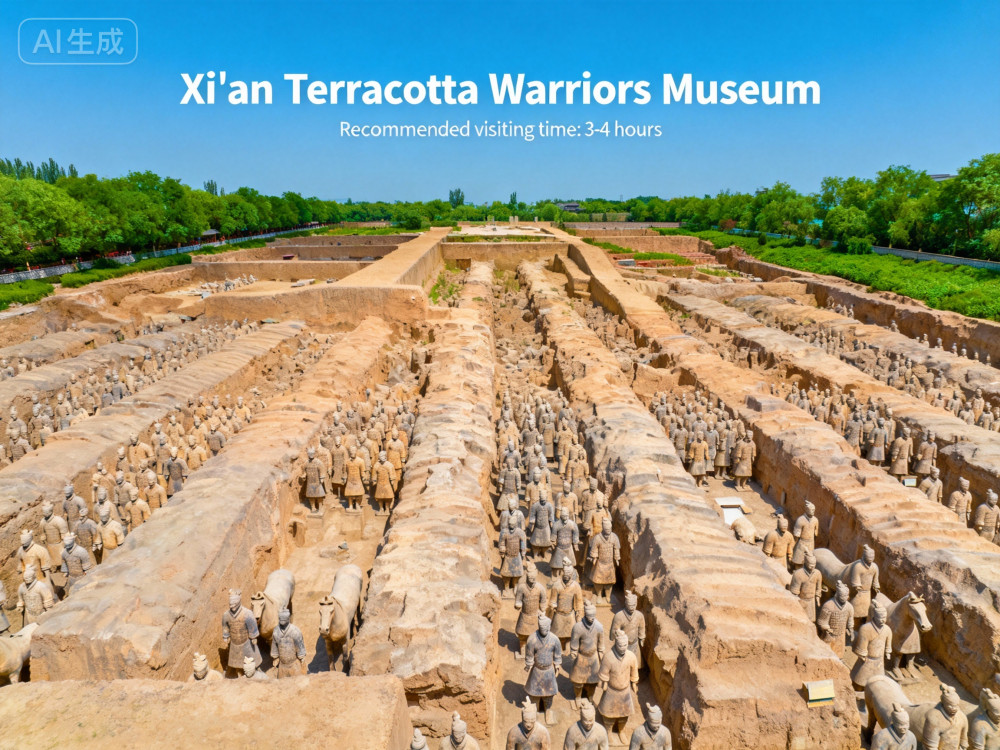
The Terracotta Warriors Museum, also known as the Mausoleum of the First Qin Emperor, is one of the most significant archaeological discoveries of the 20th century. Discovered in 1974 by local farmers digging a well, this incredible underground army was created to accompany China's first emperor, Qin Shi Huang, into the afterlife. The museum complex consists of three main pits containing over 8,000 life-sized terracotta soldiers, 130 chariots with 520 horses, and 150 cavalry horses, each with unique facial features and expressions. This UNESCO World Heritage Site represents the pinnacle of ancient Chinese military organization, artistry, and imperial power, showcasing the remarkable achievements of the Qin Dynasty that unified China in 221 BC.
Things to Do
- Explore Pit 1 the largest excavation site with thousands of infantry soldiers
- Visit Pit 2 to see the command post with generals and officers
- Discover Pit 3 containing the high command headquarters
- View the Bronze Chariots and Horses exhibition
- Watch the documentary film about the discovery and excavation
- Take photos with the life-sized warrior replicas
- Learn about the restoration process in the conservation area
- Visit the museum shop for authentic souvenirs