 Tourism Guide
Confucius Temple
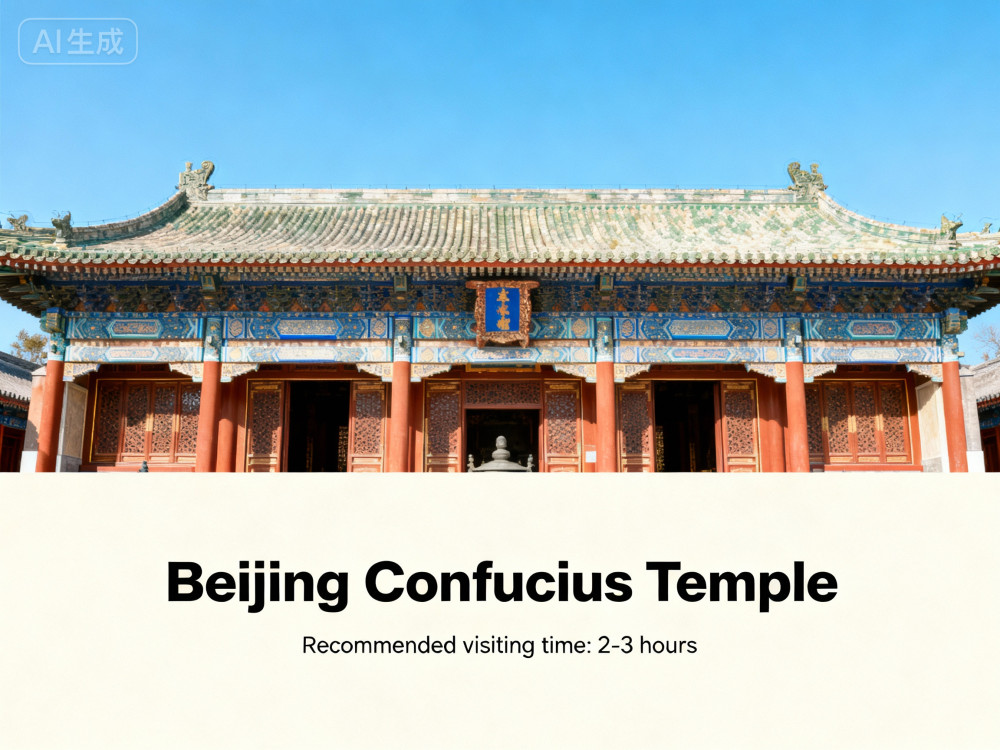
The Beijing Confucius Temple is one of the largest and most important Confucian temples in China, serving as a center for imperial worship of Confucius during the Ming and Qing dynasties
Key Information
Built
1302 AD (Yuan Dynasty)
Architectural Style
Traditional Chinese Imperial Architecture
Main Hall
Dacheng Hall
Area
22,000 square meters
UNESCO Status
Part of Beijing Historic Sites
Best Time to Visit
Spring and Autumn
Nearby Attractions
Lama Temple, Yonghegong
Cultural Significance
Imperial worship site for Confucius
About Confucius Temple
Located in the heart of Beijing near the Lama Temple, the Beijing Confucius Temple was originally built in 1302 during the Yuan Dynasty and expanded during the Ming and Qing periods. This sacred complex served as the imperial temple where emperors would personally pay homage to Confucius, the great Chinese philosopher and educator. The temple complex covers approximately 22,000 square meters and features traditional Chinese architecture with red walls, yellow glazed tiles, and intricate wooden structures. The main hall, Dacheng Hall, is particularly impressive with its double-eaved roof and nine-bay width, a privilege reserved for imperial buildings. Within the temple grounds, youll find 198 stone tablets inscribed with the names of over 50,000 scholars who passed the imperial examinations, creating a fascinating historical record of Chinas intellectual elite. The temple also houses the Imperial Academy, where scholars studied for the civil service examinations that determined government appointments for centuries. Today, the temple stands as a peaceful oasis in bustling Beijing, offering visitors a glimpse into Chinas rich educational and philosophical traditions.
Things to Do
- Explore the magnificent Dacheng Hall with its imperial architecture
- Examine the 198 stone tablets inscribed with names of imperial scholars
- Visit the Imperial Academy where scholars prepared for civil service exams
- Admire the ancient cypress trees in the temple courtyard
- Learn about Confucian philosophy and its influence on Chinese culture
- See the collection of ancient musical instruments used in Confucian rituals
- Walk through the tranquil courtyards and gardens
- Attend seasonal ceremonies and cultural events held at the temple