Why go
About
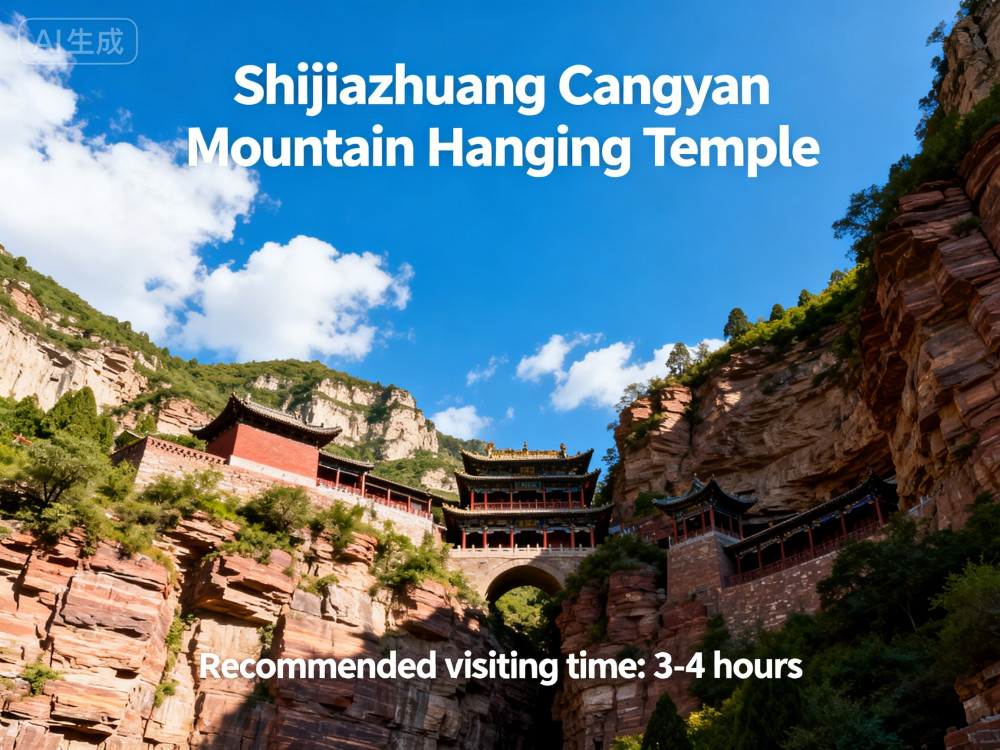
Cangyan Mountain Hanging Temple also known as Xuankong Temple is one of Chinas most breathtaking architectural wonders dating back to the Northern Wei Dynasty around 491 AD Perched precariously on the sheer cliffs of Cangyan Mountain about 50 kilometers southwest of Shijiazhuang this temple complex defies gravity and engineering logic What makes this temple truly unique is its harmonious integration of three major Chinese religious traditions Buddhism Taoism and Confucianism all coexisting within the same sacred space The temple appears to hang from the cliff face supported by wooden beams inserted into holes drilled into the rock with its 40 halls and pavilions connected by narrow walkways and dizzying staircases The architecture follows the natural contours of the cliff creating a seamless blend between human creation and natural wonder The temple complex includes notable structures like the Sanjiao Hall where statues of Confucius Laozi and Buddha sit side by side symbolizing religious harmony The temple has survived earthquakes floods and wars for over 14 centuries thanks to its ingenious construction that allows it to sway with the mountains movements rather than resist them The surrounding Cangyan Mountain area features lush forests ancient trees and natural springs creating a serene spiritual atmosphere
Make time for
Practical ideas, not a checklist
- Explore the gravitydefying temple halls connected by narrow walkways
- Visit Sanjiao Hall to see the unique coexistence of Buddhism Taoism and Confucianism
- Walk the cliffside pathways for breathtaking panoramic views
- Photograph the temples dramatic architecture against the mountain backdrop
- Learn about ancient Chinese engineering techniques that built this marvel
- Hike the surrounding Cangyan Mountain trails through ancient forests
- Visit nearby ancient stone carvings and inscriptions
- Experience the spiritual atmosphere of this sacred mountain site
Good to know
- Built
- 491 AD Northern Wei Dynasty
- Architectural Style
- Traditional Chinese Cliffside Architecture
- Religious Significance
- Buddhism Taoism Confucianism Integration
- UNESCO Status
- Part of Mount Tai Cultural Landscape
- Best Time to Visit
- April to October
- Altitude
- Approximately 1000 meters above sea level
- Number of Halls
- 40 halls and pavilions
- Construction Method
- Wooden beams inserted into cliff rock