The place
More of China · Destination
Harbin
ChinaNotes updated January 17, 2026

0 guides · 6 places to start
Worth the detour
Places to see
A starting point for Harbin — from the landmarks you already know to the quieter corners worth making time for.
 Harbin
Central Avenue
Central Avenue known as Zhongyang Dajie is Harbins most famous pedestrian street stretching 1450 meters from Jingwei Street to the Flood Control Monument at the Songhua River This iconic thoroughfare serves as a living museum of architectural history showcasing over 70 Europeanstyle buildings from the late 19th and early 20th centuries The avenue was originally constructed in 1898 by Russian engineers and has evolved into the commercial and cultural heart of Harbin earning the nickname Eastern Moscow Walking along Central Avenue is like stepping back in time to when Harbin was a major hub of the Chinese Eastern Railway and an international crossroads where Russian Jewish Japanese and European cultures converged
 Harbin
 Jewish History Museum
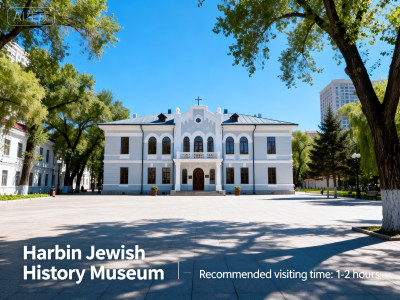
The Harbin Jewish History Museum is housed in the beautifully restored former Jewish Middle School building constructed in 1918 This museum tells the fascinating story of Harbins once thriving Jewish community which was one of the largest in East Asia during the early 20th century The Jewish community in Harbin began in the late 1890s when Jewish families fleeing persecution in Russia settled in this northeastern Chinese city Over the next few decades Harbin became home to over 20000 Jews who built synagogues schools hospitals newspapers and businesses contributing significantly to Harbins development as an international city The museum features three floors of exhibits with photographs documents artifacts and multimedia displays that chronicle the lives culture and contributions of Harbins Jewish residents Visitors can see original Torah scrolls religious artifacts household items business records and personal memorabilia that tell stories of resilience entrepreneurship and cultural exchange The museum also explores the complex historical context including the impact of World War II and the eventual departure of most Jewish residents in the 1950s
 Harbin
 Old Synagogue
The Harbin Old Synagogue also known as the Main Synagogue of Harbin stands as a testament to the vibrant Jewish community that flourished in Harbin from the late 19th to mid20th century This magnificent building constructed in 1909 represents one of the largest and most important synagogues in East Asia during its time Located in the Daoli District the synagogue served as the spiritual and cultural center for thousands of Jewish refugees and immigrants who settled in Harbin particularly during the Russian Revolution and World War II periods The architecture blends European synagogue design with local Chinese construction techniques featuring distinctive Moorish and Byzantine influences with ornate decorative elements star of David motifs and traditional Jewish symbols The synagogue complex originally included not only the main prayer hall but also a Jewish school library and community facilities Today it has been beautifully restored and transformed into a museum that preserves the history of Harbins Jewish community while showcasing the citys unique multicultural heritage The site offers visitors a fascinating glimpse into a littleknown chapter of Chinese history where different cultures coexisted and contributed to Harbins development as an international city
 Harbin
 Grand Theater
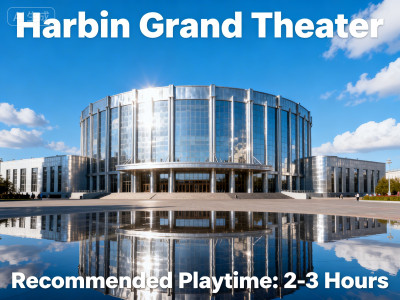
Harbin Grand Theater stands as one of Chinas most stunning contemporary architectural achievements rising majestically from the northern bank of the Songhua River Designed by the renowned MAD Architects led by Ma Yansong this cultural landmark resembles a snowdrift or a flowing river echoing Harbins winter landscape and the citys nickname as the Ice City The theaters organic curvilinear forms create a seamless integration with the surrounding natural environment while paying homage to Harbins unique blend of Chinese and Russian cultural heritage Completed in 2015 the Grand Theater has become an iconic symbol of Harbins transformation into a modern cultural hub while maintaining its historical character The buildings white aluminum panels shimmer like ice in sunlight and glow with ethereal illumination at night creating different visual experiences throughout the day and seasons Inside visitors discover worldclass acoustics and innovative spatial design that enhances every performance from classical concerts to contemporary theater
 Harbin
Heilongjiang Provincial Museum
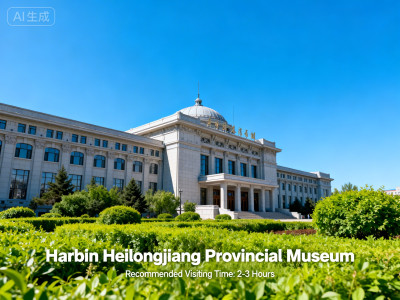
The Heilongjiang Provincial Museum stands as one of the largest and most comprehensive museums in Northeast China, offering visitors an immersive journey through the region's fascinating history, diverse ethnic cultures, and unique natural environment. Established in 1923, this museum houses over 100,000 precious artifacts spanning from prehistoric times to the modern era. The museum's architecture itself is a historical landmark, originally built in 1904 as a department store during the Russian colonial period, reflecting Harbin's unique multicultural heritage. The collections are organized into several major sections including natural history displays featuring the region's distinctive flora and fauna, archaeological exhibits showcasing ancient civilizations that thrived in the Heilongjiang region, ethnic cultural displays highlighting the traditions of Manchu, Korean, Mongolian, and other minority groups, and historical artifacts documenting the region's development through various dynasties and modern periods. Particularly noteworthy are the exhibits on the Jurchen people who established the Jin Dynasty, the unique ice and snow culture of Northeast China, and the region's role in the development of modern China. The museum serves as an essential educational resource for understanding the complex tapestry of cultures that have shaped this border region where Chinese, Russian, Korean, and indigenous influences converge.
 Harbin
 Confucius Temple
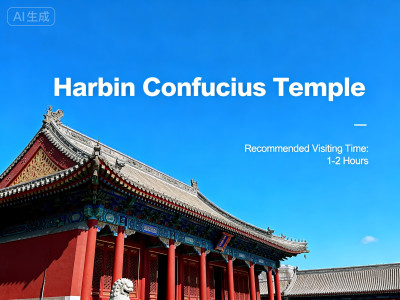
Harbin Confucius Temple, also known as the Confucian Temple of Harbin, is a magnificent architectural complex dedicated to Confucius, the great Chinese philosopher and educator. Built in 1926 during the Republic of China period, this temple represents the fusion of traditional Chinese culture with Harbin's unique historical background. The temple complex covers an area of 25,000 square meters and features the classic Chinese temple layout with courtyards, halls, and pavilions arranged along a central axis. Unlike many Confucius temples in southern China, this one incorporates some architectural elements influenced by Harbin's Russian heritage, creating a distinctive cultural blend. The main hall, Dacheng Hall, houses a statue of Confucius and is used for traditional ceremonies and cultural activities. The temple serves not only as a place of worship but also as an important cultural and educational center, hosting various cultural events, calligraphy exhibitions, and traditional music performances throughout the year.