Skip to content

Shijiazhuang · Attraction

Xibaipo Memorial Hall

The sacred revolutionary site where the Communist Party of China prepared for the founding of New China

ShijiazhuangIn the destination guideShijiazhuangExplore
Xibaipo Memorial Hall
Shijiazhuang, ChinaField notes · Attraction
ShijiazhuangRevolutionary HistoryMuseumHistorical Site

Why go

About Xibaipo Memorial Hall

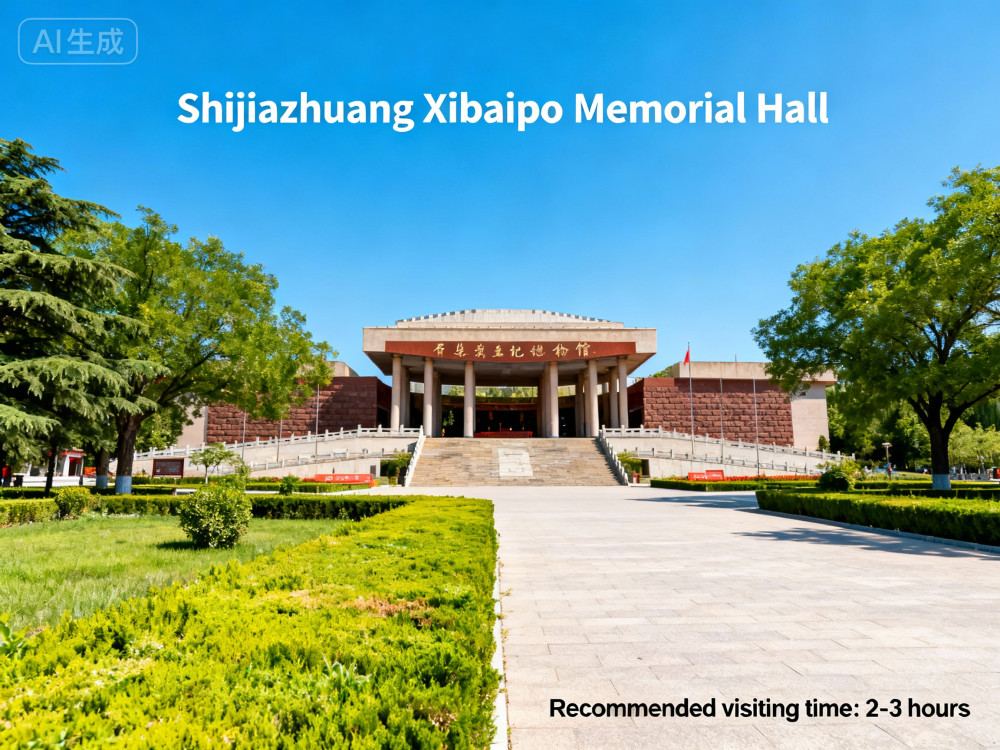
Xibaipo Memorial Hall is a significant historical site located in Pingshan County, Shijiazhuang, Hebei Province. It was here that the Central Committee of the Communist Party of China and Chairman Mao Zedong commanded the decisive battles of the Liberation War from May 1948 to March 1949. This humble village served as the last rural revolutionary headquarters before the Party moved to Beijing.

The memorial complex preserves the original residences of revolutionary leaders, military command centers, and historical artifacts that tell the story of China's revolutionary struggle. Visitors can walk through the same courtyards where Mao Zedong, Zhou Enlai, Liu Shaoqi, and other leaders lived and worked, making strategic decisions that shaped modern China. The site represents the spirit of perseverance, unity, and revolutionary determination that led to the establishment of the People's Republic of China.

Make time for

Practical ideas, not a checklist

  1. 01Visit the original residences of Mao Zedong and other revolutionary leaders
  2. 02Explore the Military Command Center where major battles were planned
  3. 03View historical photographs and documents in the exhibition halls
  4. 04Watch documentary films about the revolutionary period
  5. 05Walk through the revolutionary leaders' meeting rooms
  6. 06See the original telegraph equipment used during the war
  7. 07Visit the memorial statues and monuments in the square
  8. 08Learn about the daily life of revolutionary leaders in Xibaipo
  9. 09Explore the surrounding revolutionary sites in the village
  10. 10Attend educational lectures about revolutionary history

Good to know

Established Year
1978
Exhibition Area
13,400 square meters
National AAAA Tourist Attraction
Yes
Revolutionary Relics
Over 2,000 items
Annual Visitors
Over 1 million
Best Time to Visit
Spring and Autumn
Guided Tours Available
Yes
Audio Guide Languages
Chinese, English, Japanese, Korean
Photography Allowed
Yes (except in some areas)
Wheelchair Accessible
Yes

More in Shijiazhuang

Keep the day
unfolding.

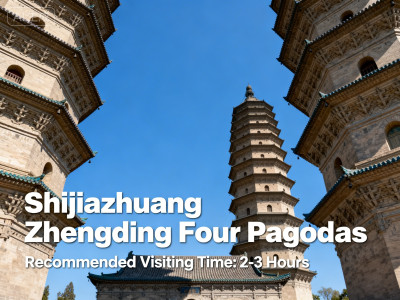
Zhengding Four PagodasShijiazhuang

Zhengding Four Pagodas

The Zhengding Four Pagodas are a magnificent ensemble of ancient Chinese Buddhist architecture located in Zhengding County just north of Shijiazhuang. These four pagodas were constructed during different periods from the Tang to Song dynasties, each representing distinct architectural styles and Buddhist traditions. They stand as silent witnesses to over a thousand years of Chinese history, religious development, and artistic achievement. The pagodas are scattered throughout the ancient town of Zhengding, creating a spiritual landscape that has inspired poets, artists, and pilgrims for centuries. Each pagoda has its unique characteristics in terms of construction materials, architectural design, and religious significance, offering visitors a comprehensive understanding of Chinese pagoda evolution. The site is particularly famous for its well-preserved state and the diversity of styles concentrated in one location, making it a must-see destination for anyone interested in Chinese architecture, Buddhism, or ancient history.

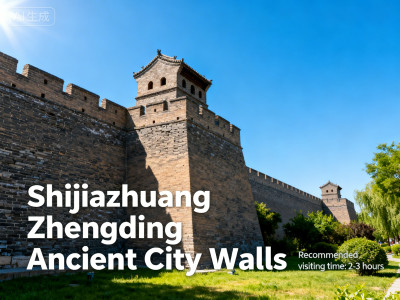
Zhengding Ancient City WallsShijiazhuang

Zhengding Ancient City Walls

Zhengding Ancient City Walls represent one of the best-preserved ancient city fortifications in northern China, with origins tracing back to the Eastern Jin Dynasty (317-420 AD). These formidable walls have witnessed the rise and fall of multiple dynasties and served as a crucial defensive structure protecting the strategic city of Zhengding, which was historically known as Changshan. The walls showcase traditional Chinese military architecture with their imposing rammed earth construction, watchtowers, and strategic gateways. What makes Zhengding particularly fascinating is its unique layout featuring four distinct gates oriented to the cardinal directions, each with its own architectural character and historical significance. The walls stretch approximately 12 kilometers in circumference and stand as a living museum of Chinese defensive engineering, having been reinforced and expanded during the Tang, Song, Ming, and Qing dynasties. Today, visitors can walk along the restored sections, marvel at the ancient construction techniques, and enjoy panoramic views of both the historic city within and the modern developments beyond.

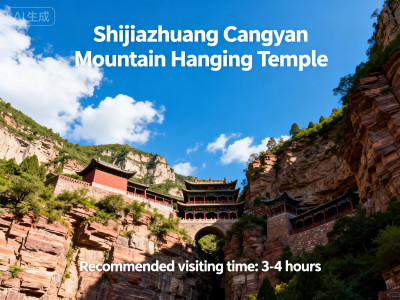
Cangyan Mountain Hanging TempleShijiazhuang

Cangyan Mountain Hanging Temple

Cangyan Mountain Hanging Temple also known as Xuankong Temple is one of Chinas most breathtaking architectural wonders dating back to the Northern Wei Dynasty around 491 AD Perched precariously on the sheer cliffs of Cangyan Mountain about 50 kilometers southwest of Shijiazhuang this temple complex defies gravity and engineering logic What makes this temple truly unique is its harmonious integration of three major Chinese religious traditions Buddhism Taoism and Confucianism all coexisting within the same sacred space The temple appears to hang from the cliff face supported by wooden beams inserted into holes drilled into the rock with its 40 halls and pavilions connected by narrow walkways and dizzying staircases The architecture follows the natural contours of the cliff creating a seamless blend between human creation and natural wonder The temple complex includes notable structures like the Sanjiao Hall where statues of Confucius Laozi and Buddha sit side by side symbolizing religious harmony The temple has survived earthquakes floods and wars for over 14 centuries thanks to its ingenious construction that allows it to sway with the mountains movements rather than resist them The surrounding Cangyan Mountain area features lush forests ancient trees and natural springs creating a serene spiritual atmosphere